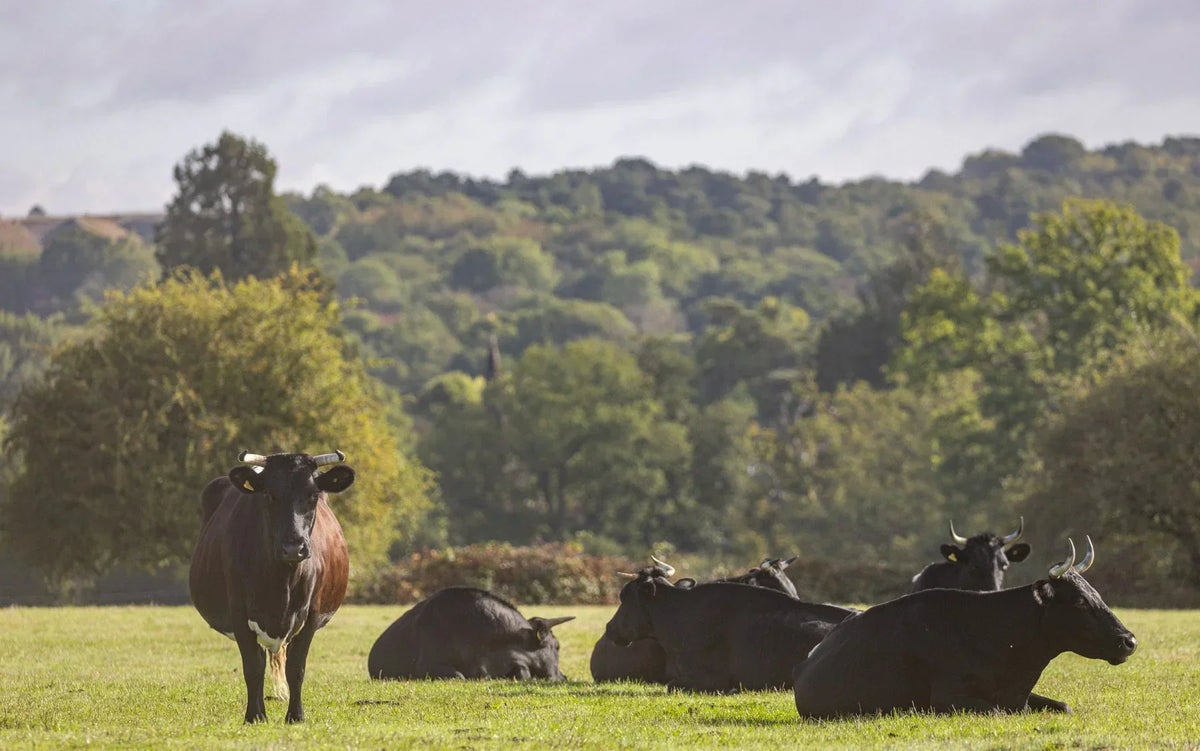
Before we saw a bolt of fabric, Pamela Sanderson took us to meet her Gloucester cattle. She is in her nineties and still involved with the herd. “These are my babies,” she told us. “We get about six calves a year.” It was a fitting introduction to Ian Sanderson, a textile company that is based on the family farm outside Newbury and has been run by the same family for more than sixty years.
Behind the hedge and wooden gate, the business is spread across the property. Helen develops new fabrics in the kitchen; the offices are filled with samples, swatches, and work in progress; and the Barn is where fabric is inspected, cut, and prepared for shipping. The cattle graze just beyond. The proximity of the house, the family, and the business is part of how the company works.
A Family Textile House
Julian’s father, Ian Sanderson, started the company in 1962 in a basement on Charlotte Street in London’s West End. After working for a London wholesaler that supplied fabrics to interior designers, he saw room for more choice and began importing bolder designs and colors from Europe and the United States before developing collections of his own, woven and printed by British and European mills. The stripes and checks that remain central to the collection date from the 1980s, and early clients included Nina Campbell and Tricia Guild, then at the beginning of their careers. The company later moved from London to Newbury. Since 1995, Julian and Helen Sanderson have run the business from the family farm, with Julian as managing director and Helen as creative director.
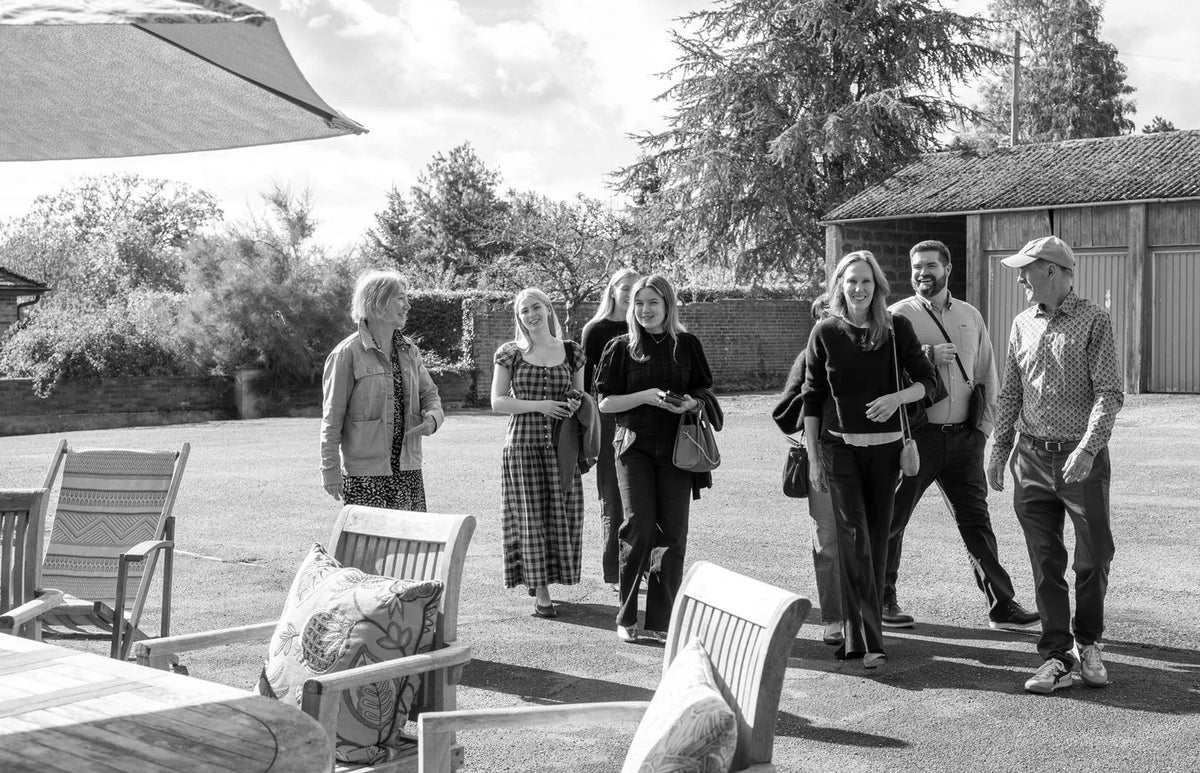
Ian Sanderson has been family run for more than sixty years, and it has stayed small on purpose, with a curated collection rather than a sprawling one and a way of working in which ideas are tried, lived with, and refined over time. Everyone we met described the business with the same three words: loyal, small, like family. The day kept proving them right. Echo, the studio cat, made his rounds through the offices, and Pamela and Julian talked across the table while the conversation moved easily between family life, travel, fabric, and the work at hand.
Designed at the Kitchen Table
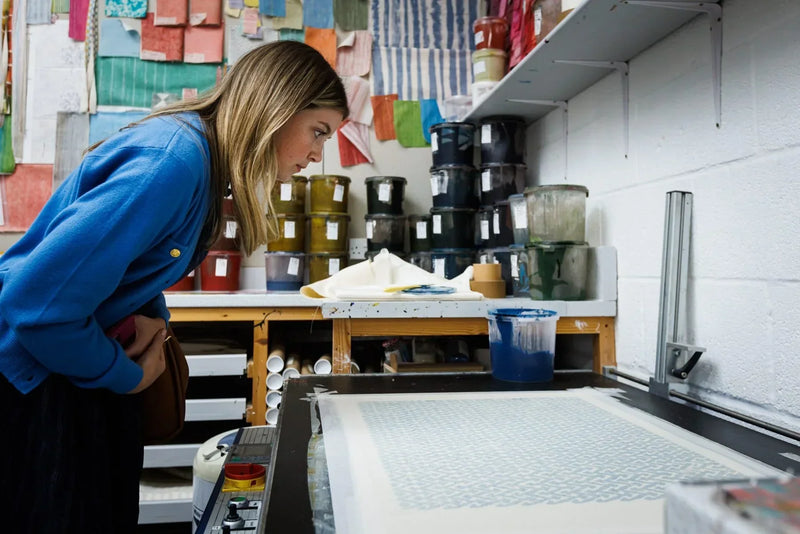
Helen develops new fabrics at the family’s kitchen table, surrounded by the references that inform her designs. Drawings, photographs, and fabric swatches cover the walls, alongside vision boards showing the lampshades planned for each textile from the earliest stages of design. The offices next door are equally hands-on, with sample lengths draped over surfaces, upcoming products in view, and trial ideas left out where everyone can see them.
Helen’s instinct sets the direction. She looks for patterns and colors that have fallen out of use, often finding the starting point in antiques, archival references, and historic color. When we asked about her color inspiration, she pulled out a chart from Buttermilk Paints, an American maker of historic paints, and pointed to a barn red and a deep verdant green. It was the depth of those tones that interested her. The references may be historic, but the result is not meant to feel historic. Helen’s designs go through many iterations between the first idea and the finished lampshade, a process that can take many years.


From Reference to Fabric
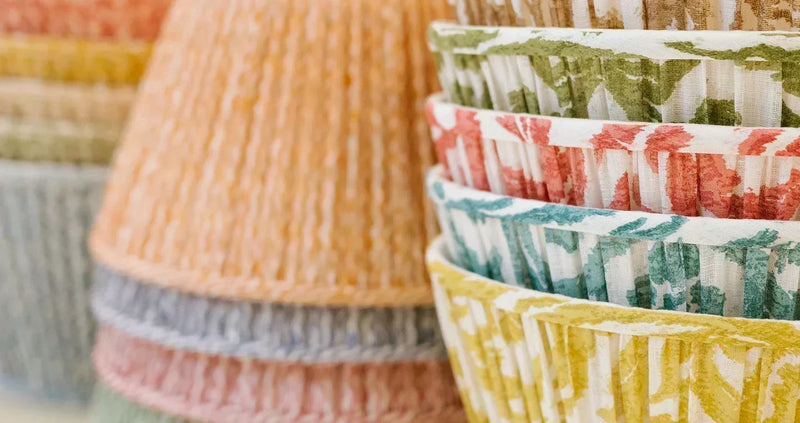
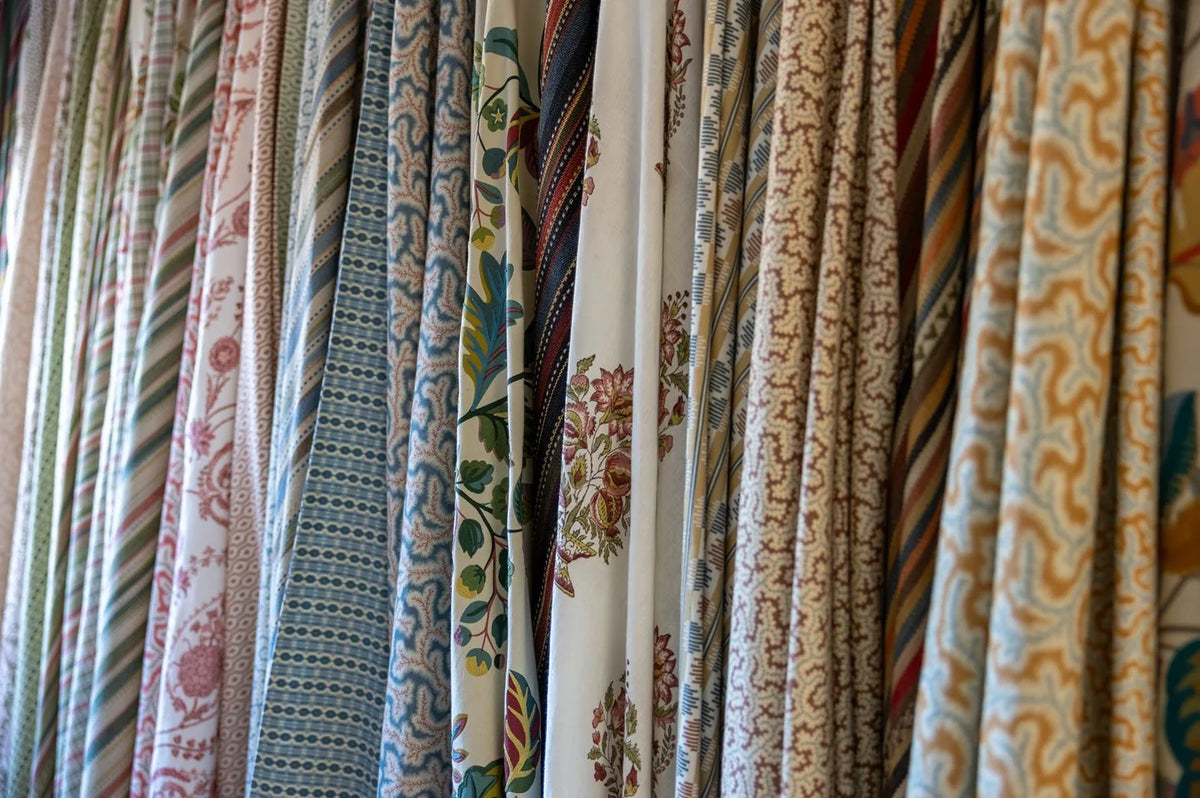
One new pattern began with an old magazine Helen found in an antique shop. That instinct—to notice something overlooked and reconsider it—is visible in several of the Ian Sanderson fabrics we know especially well at The Shade Shop. Pinto was enlarged from a small fragment of nineteenth-century patchwork; on a lampshade, the larger scale makes it feel graphic rather than overtly historic. Dulcie began with seaweed, a traditional subject drawn with movement and offered in colorways that shift its character completely, from green and burgundy to turquoise and orange. Throughout the property, the development of a fabric remains visible, from the references and vision boards in the kitchen to trial pieces in the offices and swatches being cut and sorted in the Barn.
Designing for the Lampshade
Dulcie’s newly introduced larger version shows how much a change in scale can alter a lampshade. The original’s smaller repeat creates a finer pattern across the surface, while the larger version (pictured on the lamp below) gives more prominence to the curves of the seaweed motif. The choice of scale changes both the detail seen up close and impression the fabric makes from a distance.
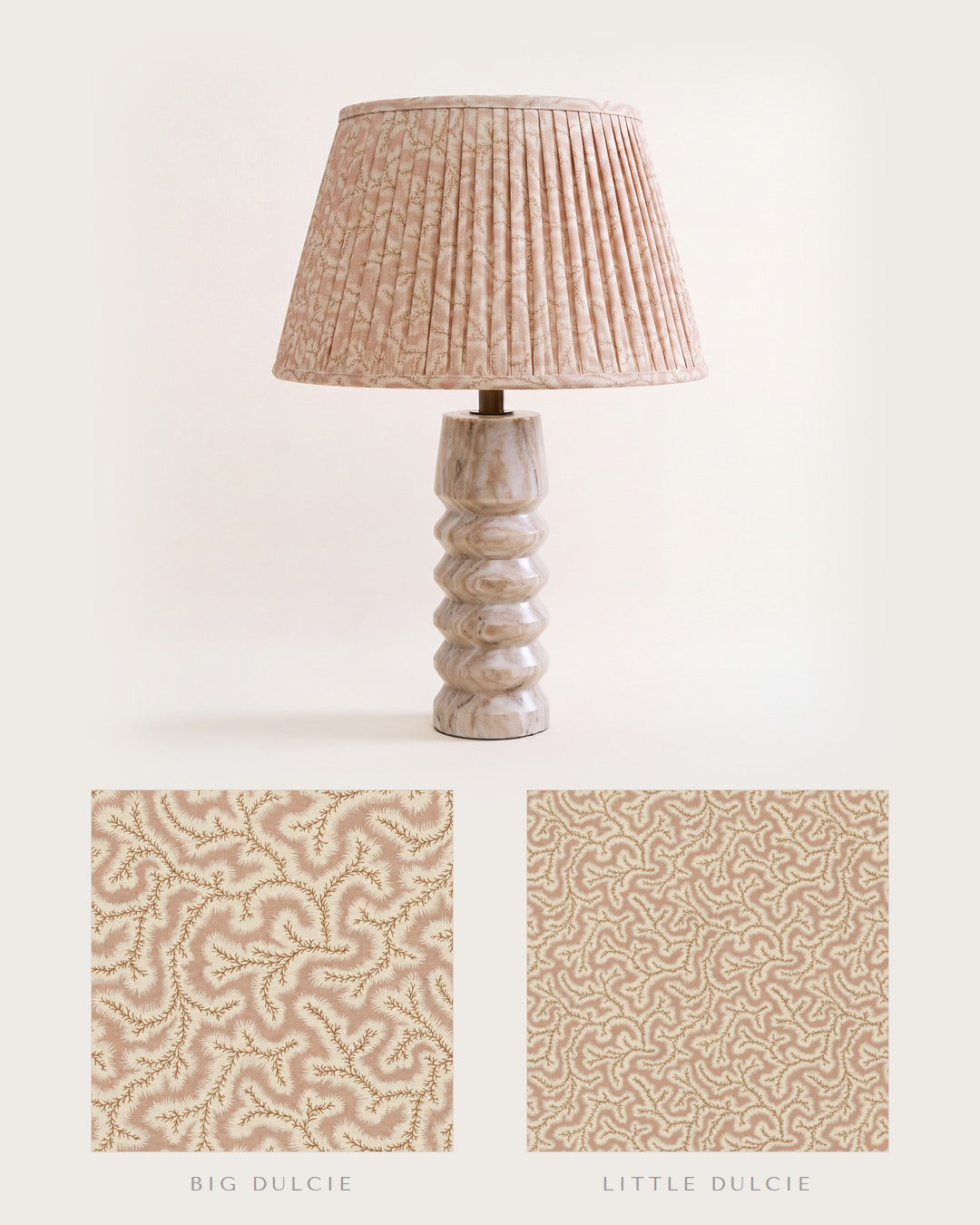
At Ian Sanderson, those considerations begin while a fabric is still being developed. Construction matters just as much as scale. A hardback lampshade keeps the pattern flat and defined, while a soft, gathered, or pleated lampshade breaks the repeat into folds and changes the way the pattern reads.


Inside the Barn
The Barn is where swatches are cut and sorted and every length of fabric is checked before it ships. Each bolt passes across a quality inspection machine so the cloth can be examined carefully for flaws before it leaves the building. The lampshades themselves are made off site by shademakers, so the work here is focused on the fabric: receiving it, inspecting it, preparing it, and making sure it meets the standard before it goes out.
Jacob handles quality control and shipping, with bolts stacked on blue racking behind him and handwritten cards tied to each end noting the pattern, colorway, and length. Much of the process is supported by modern machinery, but the final inspection still depends on a trained eye.


Ian Sanderson at The Shade Shop
The Shade Shop is Ian Sanderson’s exclusive U.S. retail partner for finished lampshades, and we carry an extensive in-stock selection. We also develop lampshades and pillows with the Ian Sanderson team that are exclusive to The Shade Shop. Today, we keep more than fifty Ian Sanderson lampshade styles in stock, most in five sizes, giving designers access to a collection that would otherwise require a made-to-order lead time from England.


What stayed with us after the visit was how closely the setting, the family, and the collection are connected. Ian Sanderson has changed considerably since the company began in London in 1962, but it remains a small family business with a very specific point of view. Helen and Julian continue to draw from historic references, develop fabrics at the farm, and consider how those fabrics will work in a room. That same attention to pattern, scale, and the way a fabric behaves on a lampshade is central to our relationship with Ian Sanderson.
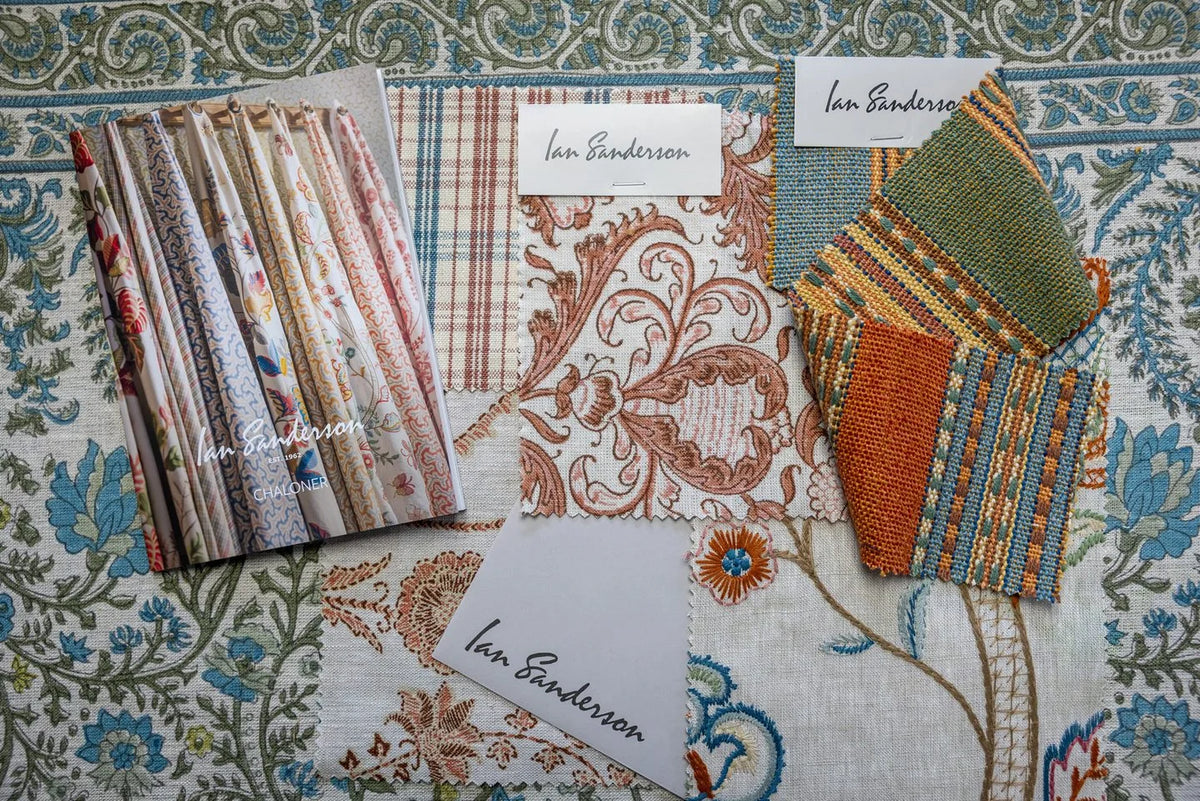
Explore our in-stock Ian Sanderson collection.
The first stop on our September trip was Marlborough: read Inside the Fermoie Studio to follow a Fermoie pattern from the drawing table to a finished lampshade.