


To us, one of the most exciting parts of helping a customer choose a new lampshade is figuring out how to integrate it into the space where it’s going. Chosen well, a lampshade can be the piece that ties all the elements of a room together and makes it feel complete. Solid-colored lampshades can achieve this, but so can patterned ones, and we find that well-designed interiors often mix and layer patterns, prints, and color. Here are some tips to help you choose a patterned lampshade:
Give the Patterns a Color in Common
Start with a color already present in the room. It might be a small detail in the wallpaper, a thread in the rug, or a color in a painting. Repeating it in a lampshade gives the new pattern a connection to the furnishings around it. There is no need to reproduce the whole palette; one related color is often enough.
In Studio Olivine’s bedroom, pink appears in the lampshade, nightstand, rug, and bedding, while blue floral wallpaper surrounds the arrangement. The repeated pink connects pieces with different surfaces and patterns. When choosing a lampshade for a room like this, look at both the motifs and their background color, since both contribute to the combination.




Vary the Scale
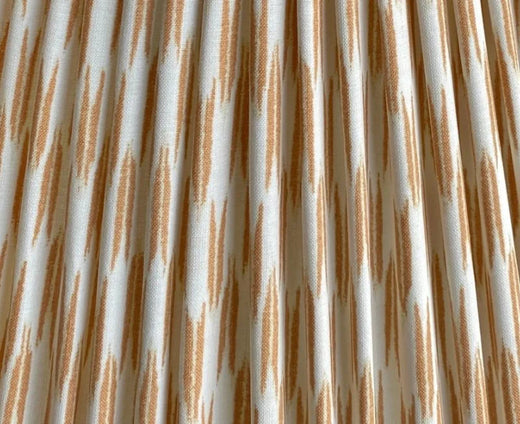
Scale is the size of the individual motifs. When patterns sit close together, a difference in scale helps you distinguish one from the next. Beside a large floral or broad check, try a lampshade with a fine stripe or a small floral print so there is variance in pattern sizes.
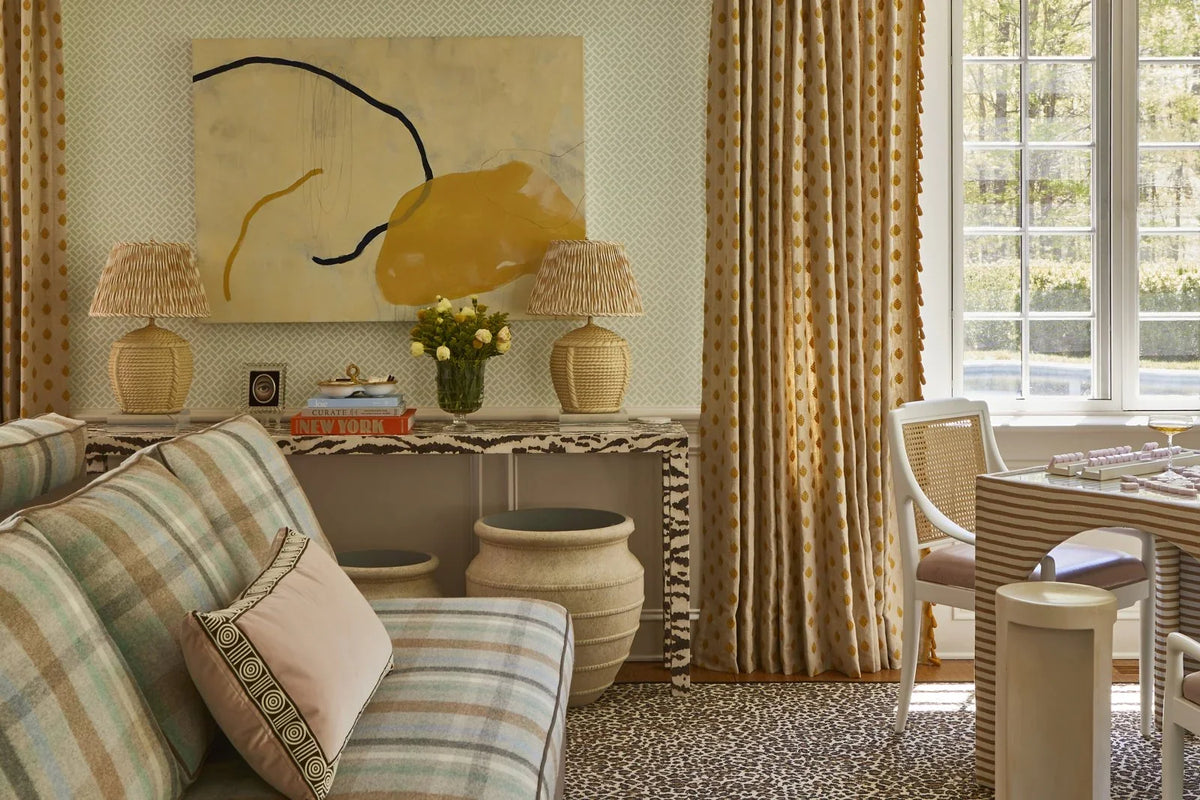
In Toledo Geller’s game room for Mansion in May 2025, pictured below, the lampshades carry a fine repeat alongside the broader plaid upholstery and spotted rug. The designs share warm, muted colors, but each contributes a different scale of detail.



Chosen well, a lampshade can be the piece that ties all the elements of a room together and makes it feel complete.
Combine Different Kinds of Pattern
A stripe, a floral, and a geometric print can work together because they offer different shapes and rhythms. Once you have found your color connection, introduce a new pattern to the mix. A small stripe beside a botanical print gives you a different combination from two botanical designs of similar size.
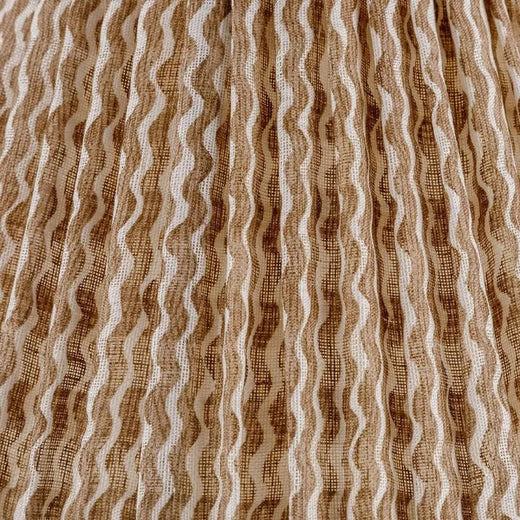
Ashley Hanley’s vignette shows this clearly. The fine wave stripe on the pleated lampshade relates to the brown tones of the chest and Roman shade, while its narrow, repeating lines differ from the larger patterns present at the window and in the artwork. The lampshade adds another pattern without duplicating or conflicting with anything around it.
Shapes, borders, and edges count as pattern, too. The scalloped rim of the tray, the gilt borders of the frames, and the pleated edge of the lampshade each draw a line of their own, and the wave of the Popple design, Fermoie’s hand-drawn stripe, is the one that moves. Look for these smaller rhythms when you compare lampshades; a scallop, a stripe, or a pleat can echo an edge already in the room.



Look at the Whole Combination
Give the patterns a color in common, vary their scale, and combine different kinds of pattern; then look at the whole combination. Picture the lampshade from the doorway and from the chair or bed beside it, and notice whether the color connection is clear, whether nearby patterns differ enough in scale or form, and whether the lamp draws the amount of attention you intended. With a pair of lamps or several sconces, consider how repeating the pattern across the setting changes the effect across the room.
Ask us
Find your patterned lampshade.
If you would like help finding a patterned lampshade for your room, send us a photograph of the lamp and its surroundings. We can help you compare colors, motifs, and pattern scales alongside your existing furnishings.
- 1Photograph the lamp where it lives, with the rug, wall, and upholstery in frame.
- 2Note the measurements of the existing lampshade: top, bottom, and slant.
- 3Tell us the color you would like the pattern to pick up.


